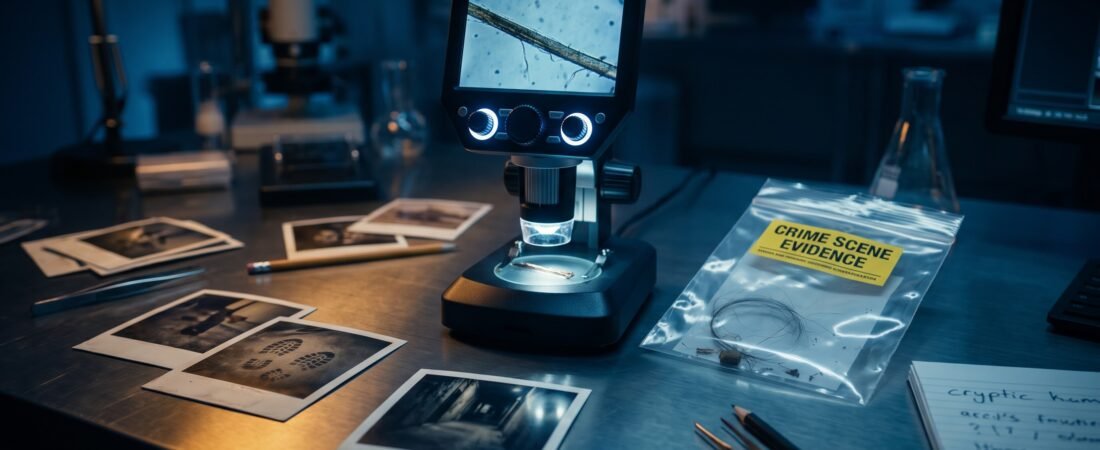
The Anatomy of a Perfect Crime: When Modern Forensics Meet Dead Ends
In the era of DNA profiling, digital footprints, and advanced crime scene analysis, getting away with a major crime seems nearly impossible. We are taught that every contact leaves a trace. Yet, some criminals manage to orchestrate the “perfect crime,” leaving top-tier investigators and cutting-edge forensics completely in the dark.
While television shows wrap up complex cases in under an hour using magical lab results, the reality is far more frustrating. Sometimes, a lack of evidence stumps the police. Other times, an overwhelming amount of physical evidence leads to an absolute dead end. Here is a look into the anatomy of the perfect crime, where modern forensics simply wasn’t enough.
1. The Isabella Stewart Gardner Museum Heist: The Ghost Thieves
On March 18, 1990, in Boston, two men disguised as police officers conned their way into the Isabella Stewart Gardner Museum. Over the next 81 minutes, they executed the largest property theft in world history, making off with 13 works of art valued at over $500 million, including masterpieces by Rembrandt and Vermeer.
What makes this the perfect heist? The thieves were methodical. They bypassed the alarm systems, restrained the guards, and left absolutely no usable forensic evidence behind. No fingerprints, no hair follicles, no blood. Despite the FBI utilizing every modern advancement in forensic processing over the last three decades, the frames remain empty, and the thieves have vanished into thin air.
2. The Chicago Tylenol Murders: A Phantom Poisoner
In the fall of 1982, panic gripped the United States when seven people in the Chicago area died suddenly after taking Extra-Strength Tylenol capsules. An unknown individual had systematically removed the bottles from store shelves, laced the capsules with deadly potassium cyanide, and placed them back.
The forensic response was unprecedented. The FBI, FDA, and local police launched a massive investigation, testing millions of capsules. Yet, the killer was a ghost. They left zero fingerprints on the tampered bottles, no DNA, and no paper trail of purchasing the cyanide. The killer understood how to weaponize a public space without ever crossing the threshold of a crime scene. To this day, the case remains unsolved, though it permanently changed how over-the-counter medications are packaged.
3. The Setagaya Family Murders: The Paradox of Too Much Evidence
Can a crime be “perfect” if the killer leaves a mountain of evidence? On December 30, 2000, in Tokyo, a family of four was brutally murdered in their home. Unlike the invisible thieves in Boston, this killer left everything behind: the murder weapon, the clothes they were wearing, their blood, their fingerprints, and even half-eaten food in the kitchen.
You would think modern forensics would solve this in days. However, this case exposed the ultimate blind spot of forensic science: DNA and fingerprints are completely useless if they aren’t in a database. Despite having a complete genetic profile of the killer—down to his mixed-race ancestry—investigators have run the DNA through global databases for over two decades without a single match. The killer slipped through the cracks not by hiding his traces, but by simply not existing in the system.
The Illusion of Invincibility
These cases prove a terrifying reality: forensic science is a powerful tool, but it is not magic. A meticulously planned crime—or a phenomenally lucky criminal—can still outsmart the most advanced laboratories in the world.
Which of these cases do you find the most baffling? Do you think the Gardner Museum paintings will ever be found? Let us know your thoughts in the comments!